How to manage a rental apartment well

I. Backgrounds

After I came to Dusseldorf, I experienced the process of renting an apartment. During this time I got to know the owner of the rental apartment and we had some discussions about the rental management of the apartment.

Let’s dive into the case on how to manage an apartment commercially from the perspective of an administrator in charge of a rental apartment (5 floors, 20 rooms). I believe similar discussions can be replicated in other fields such as project management and human resources.

II. Big Picture

1. Success factors

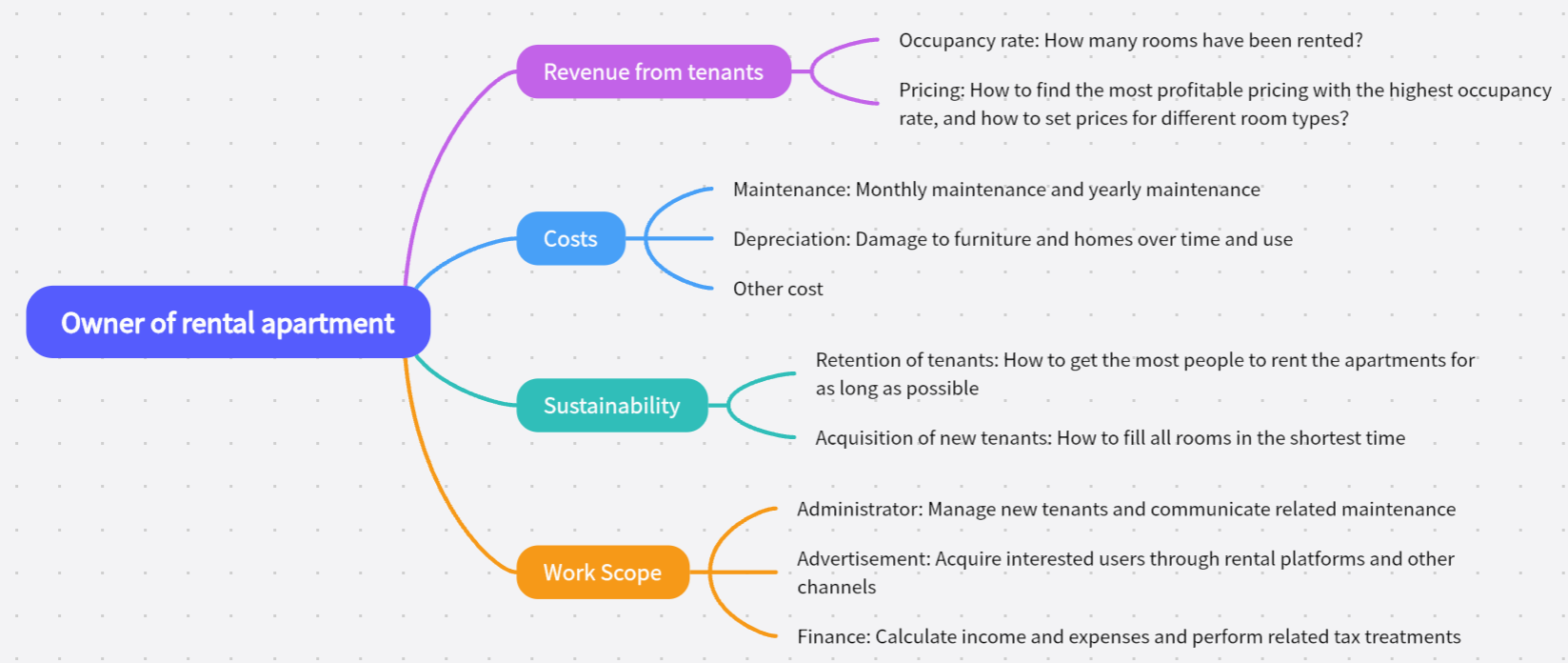
Maximise the revenue

Lower the cost

Keep a satisfied living experience

Find the most efficient advertisement solution

2. Dimension Breakdown

Collect information through following dimensions:

Tenant level: jobs, monthly income, marriage status, etc.

Planning level: Organize annual and future rental plans based on existing contracts and expectations

Actual level: Make rolling adjustments based on the actual situation

Room level: Statistics of costs and income of each room

Market level: Collect various information on the local rental market, including the number of renters and rental price levels

III. Dashboard

Integrate the collected information to obtain different insights from various dimensions and ultimately formulate decisions

*All data are fictitious and are for reference only

1. Tenant level

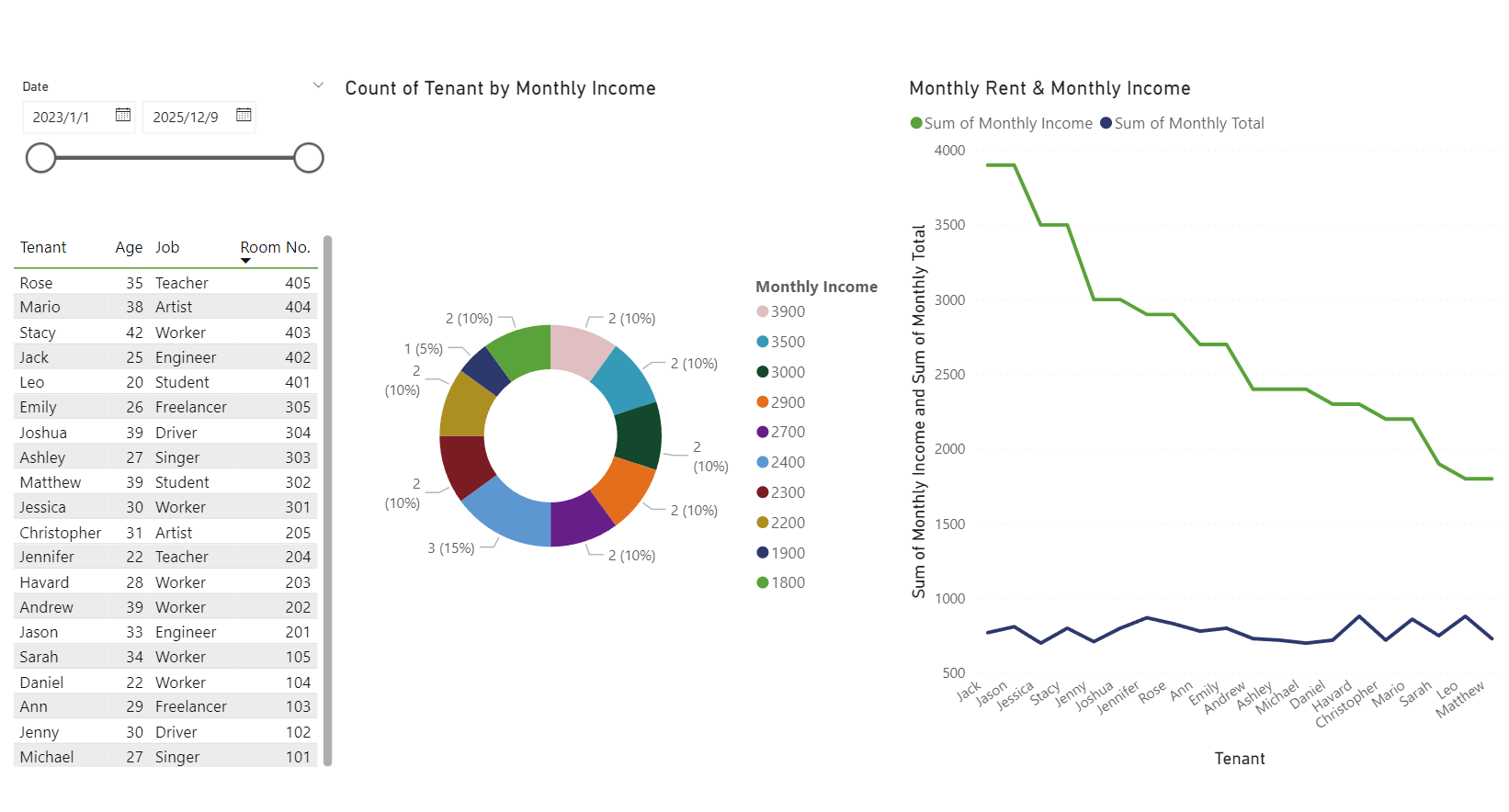
Get the idea from tenant monthly income and rent. Reduce the risk of payment delay.

2. Planning level
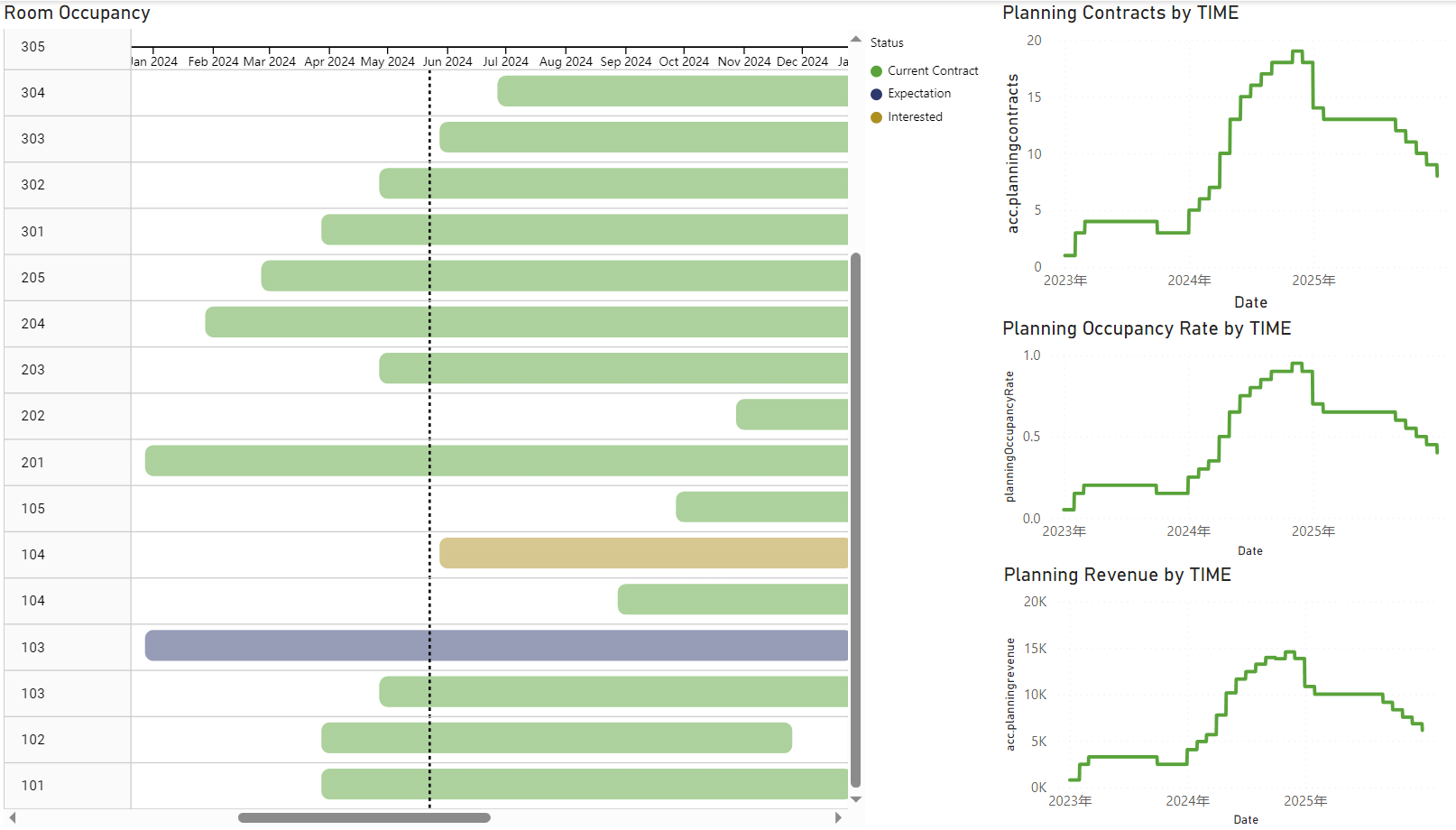
Including all the contracts and expectations to calculate the Romm Occupancy Rate and Total Revenue.

3. Actual level

Calculate Actual occupancy and profit by taking into account actual costs and actual tenant check-outs.

4. Room level

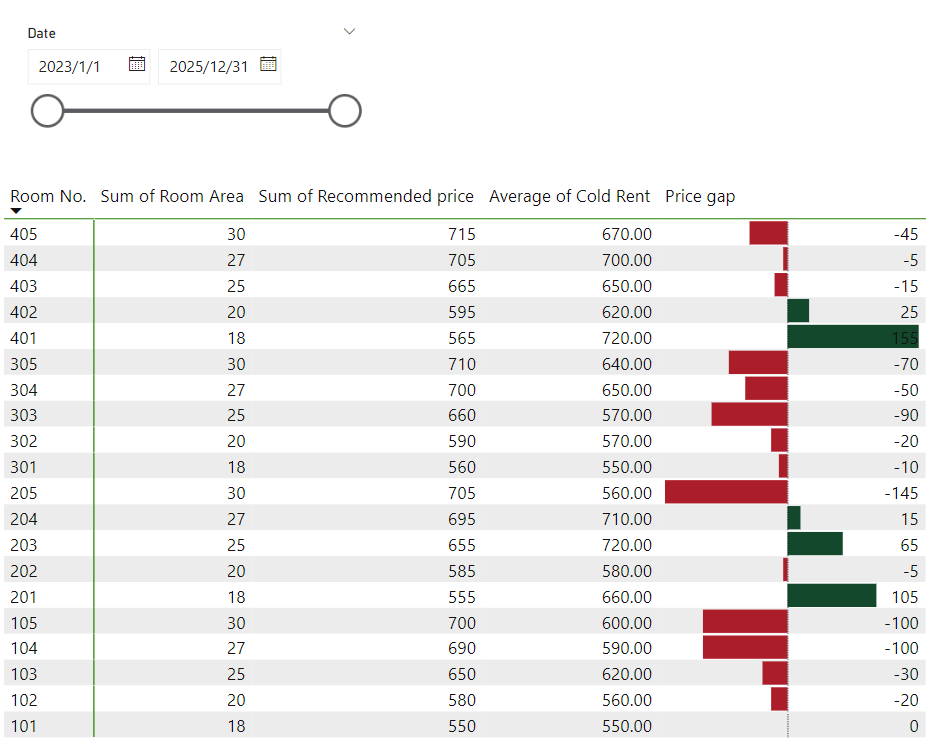
Set reasonable pricing based on market price information and evaluate the difference between the actual rental price and the listed price.

IV. Some Insights


1. Occupancy Rate means Profit

Hotel occupancy rates typically remain around 65%. Below this level, even if the unit price of the room is high, there is still a risk of loss.


2. Efficiency and Sustainability

In actual operations, improving the efficiency of recruiting tenants and the average length of stay of tenants can greatly increase revenue and profits.

3. Improve Payment Collection

Setting up automated procedures can reduce the risk of payment delays and reduce the redundant work of manual statistics.